For my major experimental project my
pitch was to make a film that was composed of randomly generated
elements using “dice rolls” or random number generators. This was
chosen as the project by me and my group partner Paul because it
seemed to be the idea with the most potential as Paul's idea was
perhaps too personal. My idea mostly came from research into “Emmy”
or “Experiments in Musical Intelligence”. Put simply Emmy is a
set of algorithms put in place by composer and programmer David Cope
which takes the music of famous composers and then de-constructs and
recombines them into new works in the style of certain composers.
This got me thinking about how to apply similar principles to
film-making. While I knew I would not be able to produce something on
the scale of something like Emmy I wanted to try to find a way to
bring a sort of “system” into creating a film. This idea became
the idea of using “dice rolls” to determine how to edit a short
piece of footage thus introducing randomness into a process that is
usually very tightly controlled. I wanted to see what kind of effect
this could have on an audience and whether the principles of Montage
film-making would apply to something that was partly created
randomly.
We essentially kept my idea the same as
it had been initially pitched throughout the planning process. My
idea was to have a base clip of a dancer dancing for one minute. We
would then use that clip again, but add the random elements to it.
Then we would take the randomly edited clip and randomly edit it
again two more times. The way in which we introduce randomness is
through using a random number generator to tell us how many frames to
edit and then other random number generators to decide what to do to
these frames. The first time we edit the one minute clip we planned
to use a one in twenty-four chance to choose how many frames we would
count. Each edit after this would use a chance four frames shorter.
The second edit would be one in twenty, the third one in sixteen and
so on. The intention is to make the piece increase in intensity as it
continues.
The effects that we would apply to
these frames were one in six. The six effects we decided on were 1)
Do nothing, 2) Reverse, 3) Double speed, 4) Half speed, 5) Invert
colours and 6) Insert random clip. If number 6 was selected then we
took a clip from a pool of thirty clips that we filmed. This was
decided by another random number generator that chose a number
between one and thirty. It was also my idea to increase the chance of
number 6 being selected as the piece continued. If the initial chance
for adding effects was one in six for the first edit then the second
edit would be one in seven, two of which would be “insert random
clip”. The third would be one in eight and so on. The intention of
this being to increase the amount of clips being added and change the
dynamic of the piece as it was going on.
We chose to have a dancer because we
wanted something that would be able to work as a single, unedited,
minute long take as well as work well being chopped up and randomly
edited. We originally envisioned something like a ballet or
interpretive dancer, but unfortunately we could not get this in the
end. The dancer was intended to be something artistic, yet mechanical
and this was meant to, in a way, mirror the ideas we were using for
our piece. Our pool of thirty clips was originally intended to be
around the theme of “movement” so that it would hopefully sync
with the dancer's movement fairly well. I think we mostly stuck to
this idea.
I think for a first attempt at the idea
of introducing a random system to the editing process this plan is
quite successful. While we exert control over what clips are in the
film and what effects, we have very little control over where and how
they happen. The piece has a structure, with the increase in added
clips and the decrease in frames effected while retaining the idea of
a random system. However I think it is perhaps a little limited in
scope and I would have liked to have taken the idea much further.
Perhaps introducing randomness into what was filmed and how it was
filmed and more into the sound.
For the soundtrack I wrote a piece of
music in a Minimalist classical style as I thought this suited the
themes of the work well. I then introduced other instruments playing
more common or traditional elements to the music and tried to sync
them to the image. This was to create a little more interest in the
soundtrack as music was the main thing that tied the piece together,
especially towards the end. Minimalism is defined by a process called
phase shifting in which you compose simple melodies and then have
them “shift” so that different notes play against other notes
from the counter-melodies without actually changing the melodies
written. In a similar fashion to the video the process is somewhat
random, while still retaining some of the composer's control in the
sense that I would write the melody and make sure that I wrote the
melodies in such a way that they would play well next to each other
in most configurations. For me the soundtrack is one of the most
successful parts of this project as I think it fits thematically and
aurally very nicely. However It could possibly have been interesting
to try and actually have some sound elements in the piece other than
music. We did try to introduce some, but we found cutting up the
sounds in the same way as the image did not work well and made it too
difficult to watch. The music itself is designed in such a way that
it easily syncs with the fairly fast paced images on the screen.
A major hurdle that me and Paul came
upon was finding a dancer to be in our film. Our original intention
was to have a single locked off shot in a blank room similar to
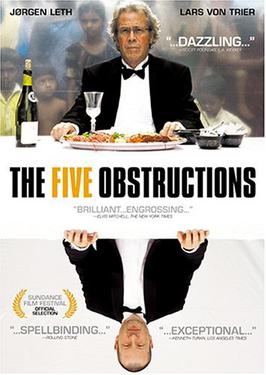
Jørgen
Leth's The Perfect Human. The dancer would dance for one minute and
then this clip would end. Unfortunately we could find no one that fit
our original ideas of what kind of dancer we would like to use. In
the end we were forced to go to a Cuban bar and restaurant and
actually film a couple doing improvised Salsa dancing. At first this
was a disappointment to me, but in the end I was actually very
pleased with how this turned out. While the shot itself is not very
impressive (too dark with an overexposed background) what happens
within the shot is actually very interesting. Because of the couple's
position in this restaurant (between the kitchen and the toilets)
there are a few people who actually enter and exit the shot. This
creates some interesting effects throughout the video when we applied
the random edits to it. I also really just enjoyed the couple's
dance. It's very interesting to watch and while the style of dancing
is not immediately suited to the music I composed it works
surprisingly well. Still even with these things that I enjoy about
this shot I cannot deny that it is not what we intended and is also a
highly flawed shot.
Similarly
while I think some of our extra clips are quite good, a number of
them are fairly uninteresting and do not really have enough content
or context to create the desired montage effects that we were hoping
for. We should really have spent more time and been more careful in
trying to film the best clips possible to insert. I still think that
the experiment with these clips is a success however as there are
definitely some moments within the film where the clips come together
and create unexpected emotions in the viewer.
One
of the obstructions we were given in creating this film was that we
had to include a reference to film-making itself or something that
“breaks the fourth wall”. We did this by including film-making
definitions between edits as a sort of playful nod to the idea of the
form of the film being more important than the actual content. We
needed a way to break up the separate edits for a couple of reasons.
Partly to show that they were the same clips being re-edited over and
over and also because having them all run together was very
exhausting for the viewer. We thought that including these very dry
definitions with white text on a black background would be a good way
of adding an extra layer of almost ironic meaning to the piece. The
definitions are all things that we use throughout the piece, but they
are also often out of our control and don't fully apply in the way
that you might expect. The intention was to sort of reveal these
things as a sort of “lie” and how they could be applied even when
they are partly out of our control. I am unsure as to whether these
definitions are essential to the piece, but for me they add quite a
lot. I think they are a good addition, but I can see how they might
confuse someone in a negative way or perhaps break up the sequences a
little too much.
Overall
I like what we created and am very happy with the results of the
experiment. There are certainly weaknesses to it such as the quality
of shots and the limitations of the system itself, but as an
experiment I think it was very successful. If I was to do it again I
would definitely take it much further coming up with a more complex
system and adding randomness to other areas. The idea of actually
programming something to take the editing process away from human
hands completely is also very intriguing to me and something I would
like to try. I feel that this project has opened my eyes to the
potential of trying something out and seeing where it goes. I have
certainly learnt from the mistakes I've made and am happy with the
successes.